Dice Shaker Motor Randomness and Sic Bo Fairness Testing Rooms
Any operator who still believes a mechanical dice shaker guarantees honest chaos has never pulled one apart on a bench at 2 a.m. The entire fairness premise of Sic Bo collapses the instant that motor's rotation profile drifts, and I have watched supposedly certified cages fail on variance alone. The shaker is not a magic randomness box; it is a motor, a cage, and a control board, and every one of those components leaks predictability if you know where to look. 🎲
The Motor Is the Weakest Link in the Chain
Strip a standard Sic Bo shaker down and you find a stepper or DC motor driving a tilted cage through a fixed gear ratio. That ratio is the first tell. A motor that spins at a constant duty cycle produces a near-periodic toss cadence, and the dice settle into repeating attitude clusters across thousands of throws. I have logged rotation waveforms where the angular velocity variance dropped below 4 percent, which is a screaming red flag for any serious auditor. Real dice shaker motor randomness demands deliberate jitter injection, variable ramp profiles, and hardware-level entropy, not a lazy constant-speed spin that a teenager with a phone camera could model in an afternoon.
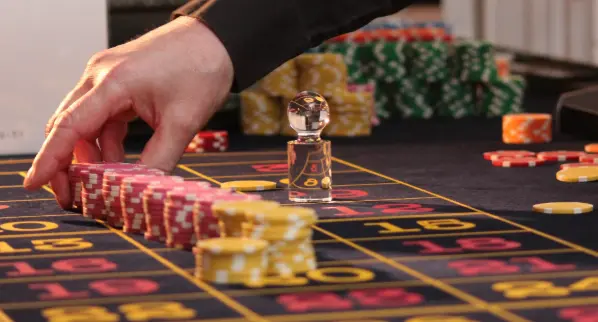
Inside a Sic Bo Fairness Testing Room
Walk into a proper Sic Bo fairness testing room and you will see what separates a real lab from a marketing brochure. High-speed cameras capture 2,000 frames per second to track every die face through the tumble. Load cells under the tray measure impact energy. Laser tachometers log the motor's RPM curve throw by throw. The good rooms run chi-square goodness-of-fit tests on all 216 three-dice combinations, and they do not stop at ten thousand rolls. I have seen operators pull the plug on a shaker model after a single combination drifted three standard deviations high across 400,000 throws. That is the level of paranoia this game deserves. 🔬
Why Static Dice and Lazy Cages Get Caught
Weighted dice are amateur hour. The real exploit lives in the cage geometry and the launch angle. A cage with a worn bushing develops a subtle bias toward one resting orientation, and over a long session that tiny lean compounds into a measurable edge. Testing rooms catch this by swapping in calibrated reference dice, running the shaker through thermal cycling from 5 to 45 degrees Celsius, and repeating the full battery after simulated 50,000-hour wear. If the randomness profile shifts more than a fraction of a percent post-wear, the unit is dead on arrival. No exceptions, no appeals. ⚙️

The RNG Overlay Nobody Audits Hard Enough
Here is where most certification schemes get soft. Operators love to bolt a software RNG on top of the physical shaker and call it a hybrid system, but nobody audits the handoff between hardware entropy and the digital seed. If the RNG reseeds on a predictable clock tick, the entire physical randomness argument is theater. I insist on independent entropy sourcing, continuous seed health monitoring, and a tamper-evident log that flags any reseed anomaly in real time. The testing room must pull those logs monthly, not annually. Anyone who waves off that requirement is selling you a fantasy, and the players eventually feel it in their gut before the math ever confirms it.
Actionable Audit Benchmarks That Actually Bite
Run a minimum of 500,000 physical throws per shaker model before sign-off. Demand a chi-square p-value above 0.05 across all combination buckets, with no single bucket exceeding a 2 percent deviation from expected frequency. Log motor RPM variance and reject any unit dipping under 6 percent angular velocity spread. Thermally cycle the hardware and repeat. Cross-validate against three independent reference dice sets. If a vendor squirms at any of these thresholds, walk away fast, because a shaker that cannot survive a proper Sic Bo fairness testing room grind is a liability wearing a certificate, and the drift always shows up in the payout curve before it ever shows up in the spreadsheet.